Native planting planned for transformed Bridge Street
19 June 2026
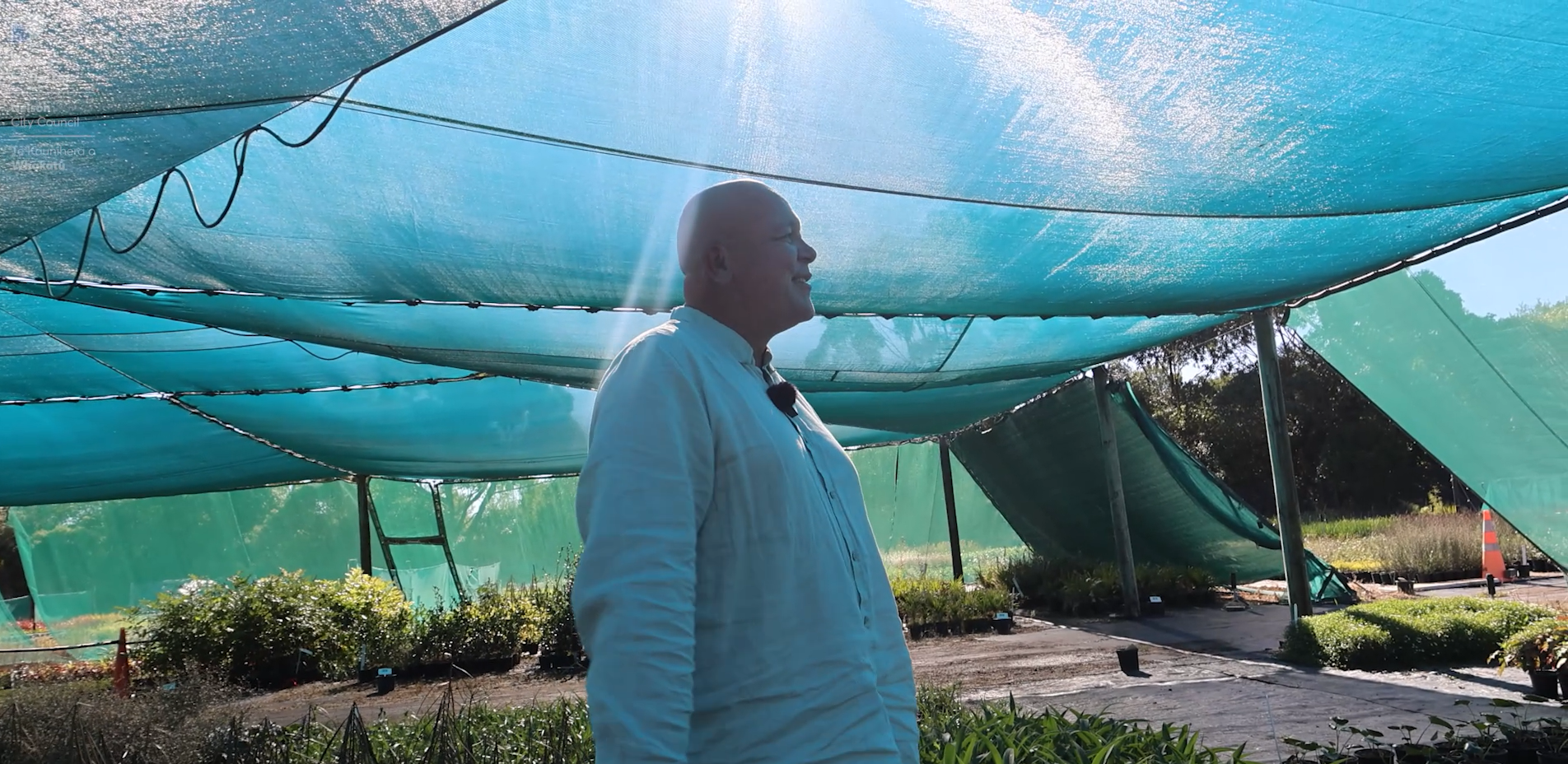
Cultural and Design Advisor Rōpata Taylor
Bridge Street will trace a journey from coast to forest as part of the Bridge to Better project, with hundreds of native plants and trees planned for Whakatū Nelson’s city centre.
Developed through a co-design process with iwi, the new streetscape will include native trees, shrubs, grasses and groundcovers chosen for their cultural significance, whakapapa and connection to the city.
Cultural and Design Advisor Rōpata Taylor (Ngāti Rārua, Te Ātiawa, Ngāti Tama, Ngāti Koata), who is part of the Bridge to Better iwi design panel, says the planting strategy reflects a different approach to planting in the city centre.
“As someone who’s from this place, these are the trees, these are the species that speak of this land. Bringing that into our streetscape is really critical and it’s appropriate, and I think most of us would say it’s time.”
He says the approach is different from how planting has been used in the city centre in the past.
“One of the big differences is the zoning approach. These are species that belong to specific parts of Whakatū - the coastal fringe, the areas inland - and bringing those back and honouring the plants that belong in those spaces is one of the exciting parts of this project.”
The planting along Bridge Street follows the concept of tai timu, tai pari, ebb and flow, and is expressed through three distinct zones: tai, hono and uta.
At the Rutherford Street end, the tai zone reflects the coastal environment, with plant species such as kōwhai selected.
Through the middle of the street, the hono zone forms a transition between coast and forest, blending species from both environments. Trees such as tī kōuka (cabbage trees) sit alongside a mix of smaller plants.
Further along the street, the uta zone shifts to forest species. Trees such as tītoki and hīnau provide shade, with smaller forest plants underneath.
Rōpata says the hope is that people experience the subtle shift as they move along the street.
“One of the things I really hope people feel when they walk through is a sense of rightness, and a sense of calmness, that this street feels appropriate to this part of the world, and that it celebrates the plants that are endemic to this place.”
A key feature running through all three zones is the use of nīkau palms, which will provide a visual link along the length of the street.
“There’s going to be 27 nīkau palms lining this street. The nīkau doesn’t look like anything else. Bringing these iconic sentinels in is what I’m most looking forward to.”
Boffa Miskell has worked alongside iwi and the project team throughout the co-design process, helping translate how the planting and wider streetscape elements come together.
Boffa Miskell Associate Principal Landscape Architect Lance Roozenberg says the planting has been deliberately arranged to create moments of interaction along the way.
“As you walk down Bridge Street, you’ll come across these pockets of planting that sit at eye level. You can interact with them as you move through the street, and that’s a real benefit of the work that’s been done.”
Boffa Miskell Senior Principal Landscape Architect Alan Gray says the planting selection process involved finding species that reflected the project’s cultural direction and would work well in a city environment.
“We worked closely with iwi through multiple rounds of plant selection and review. Some species weren’t suitable for an urban setting, whether that was because of sharp foliage, berries, or simply because they wouldn’t thrive in that environment.”
Raingardens, installed along the length of the street, will help slow and filter stormwater, and irrigation will be used to support plants through dry periods in the initial few years.
City Revitalisation Taskforce Chair Deputy Mayor Pete Rainey says the planting and wider streetscape work will help give the city centre a strong sense of identity.
“One of the really exciting parts of Bridge to Better is that it’s drawing from the character of Whakatū itself rather than trying to replicate somewhere else. The planting, materials and cultural elements all work together to create a city centre that feels distinctly Nelson.”
The project is about doing things a little differently, says Rōpata.
“People are going to be in no doubt where they are and that’s a really powerful, beautiful thing. This is Aotearoa, this is New Zealand, this is Te Tauihu, this is Nelson.”
WATCH: Cultural and Design Advisor Rōpata Taylor (Ngāti Rārua, Te Ātiawa, Ngāti Tama, Ngāti Koata), who is part of the Bridge to Better iwi design panel, explains the planting along Bridge Street follows the concept of tai timu, tai pari, ebb and flow, and is expressed through three distinct zones: tai, hono and uta.